Day 01 : Arrival in Kathmandu, transfer to hotel (1350m/ 4430ft)
Arrival in Kathmandu Airport and transfer to hotel, hotel accommodation in Kathmandu (1350m/ 4430ft).
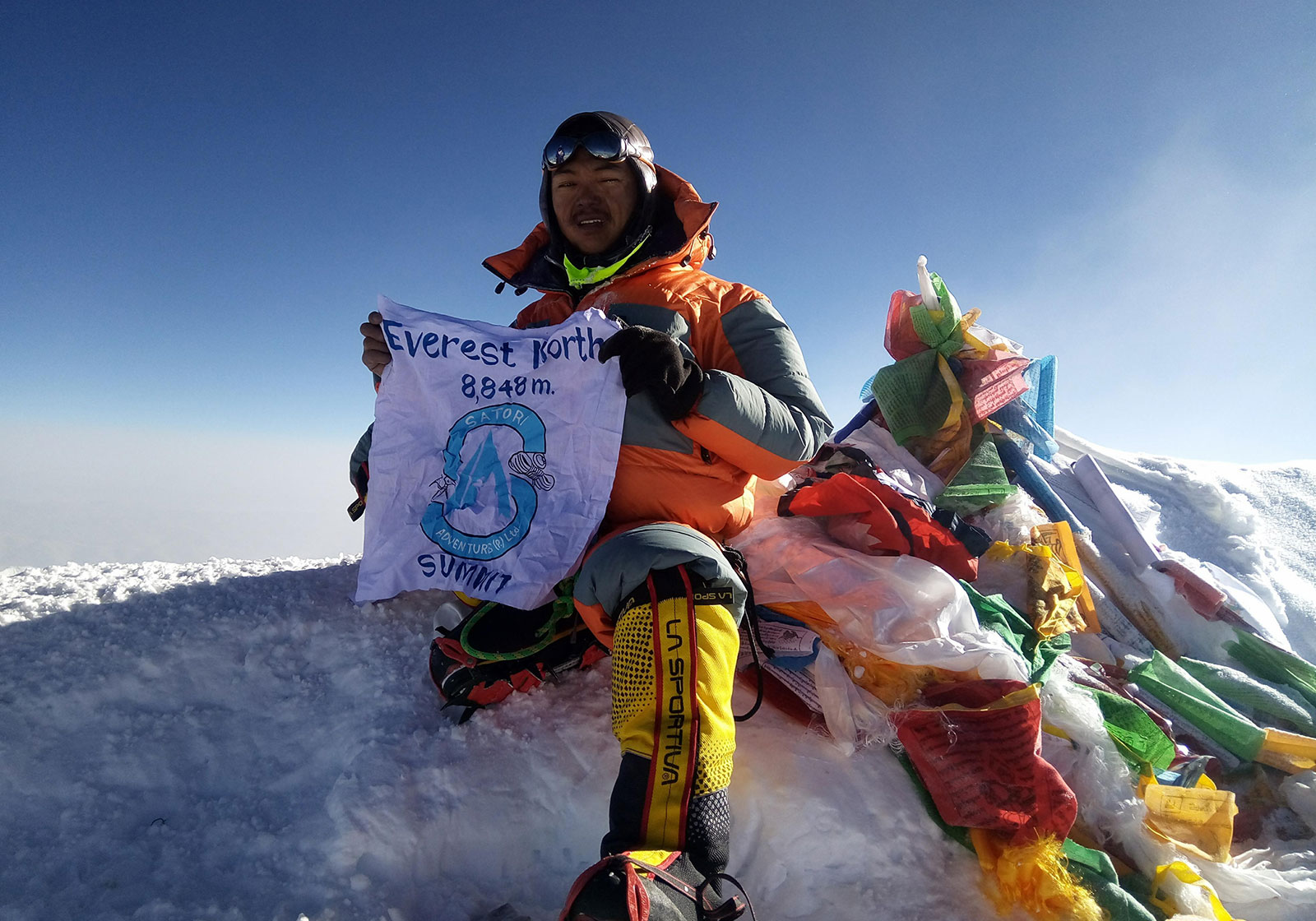
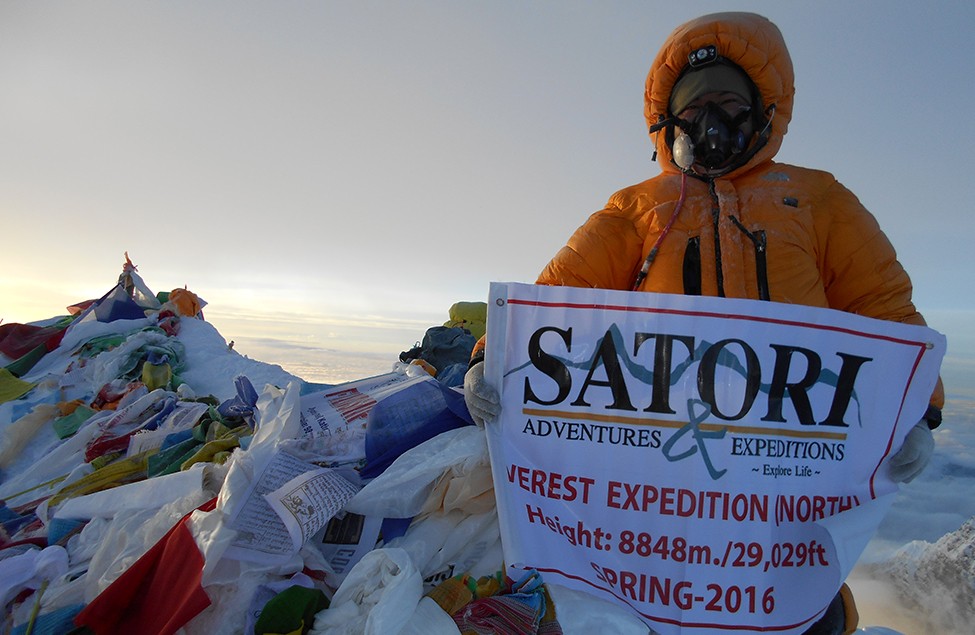
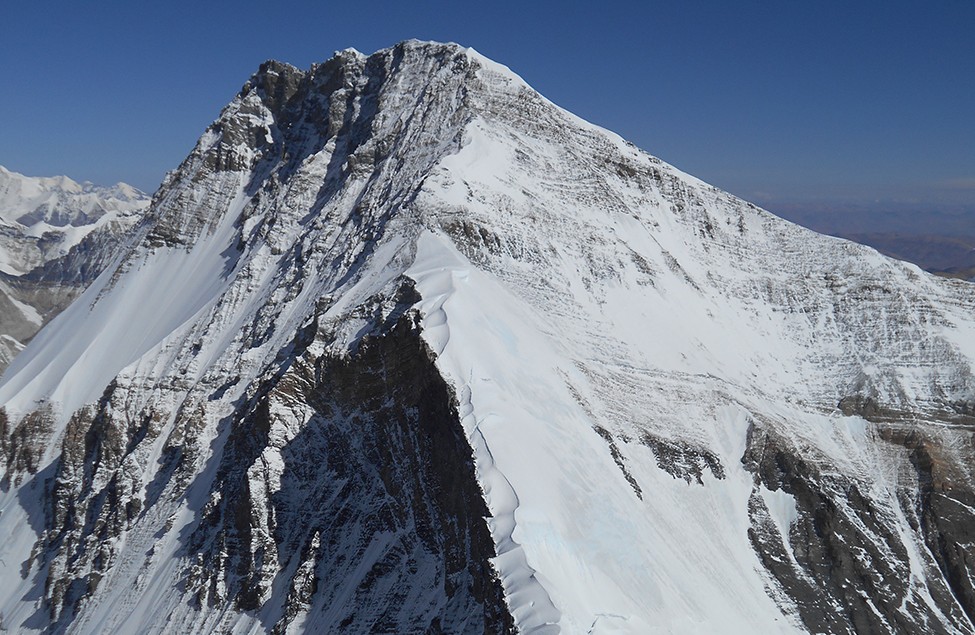
“Climb Mount Everest – the highest peak in the world – height of (8848.86m/ 29032ft) with experienced operator, Satori Adventures & Expeditions; trip named “Satori Everest Expedition North Face” each spring season via Mt. Everest North Ridge climbing Route from Tibet side.”
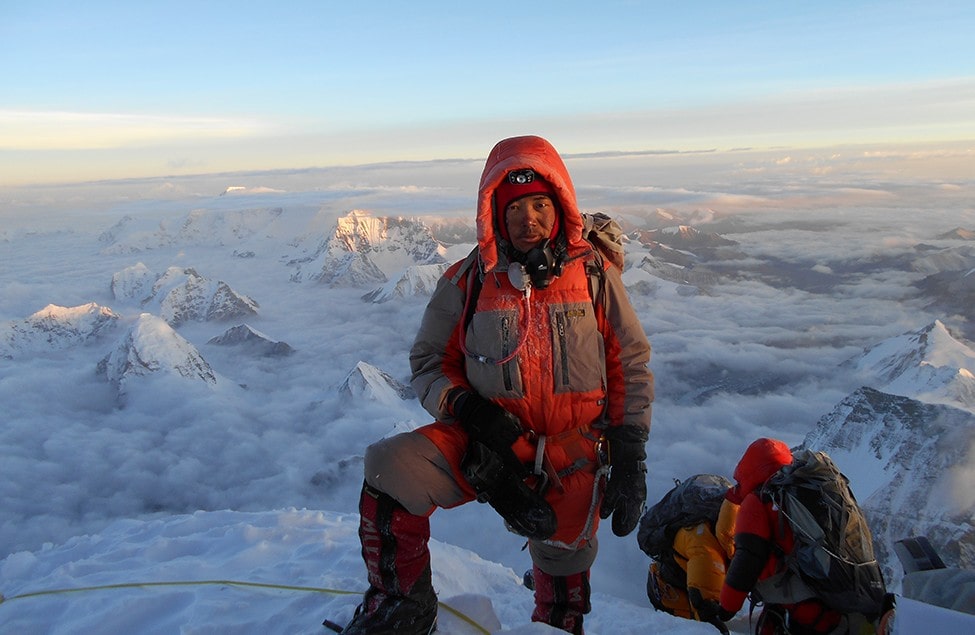
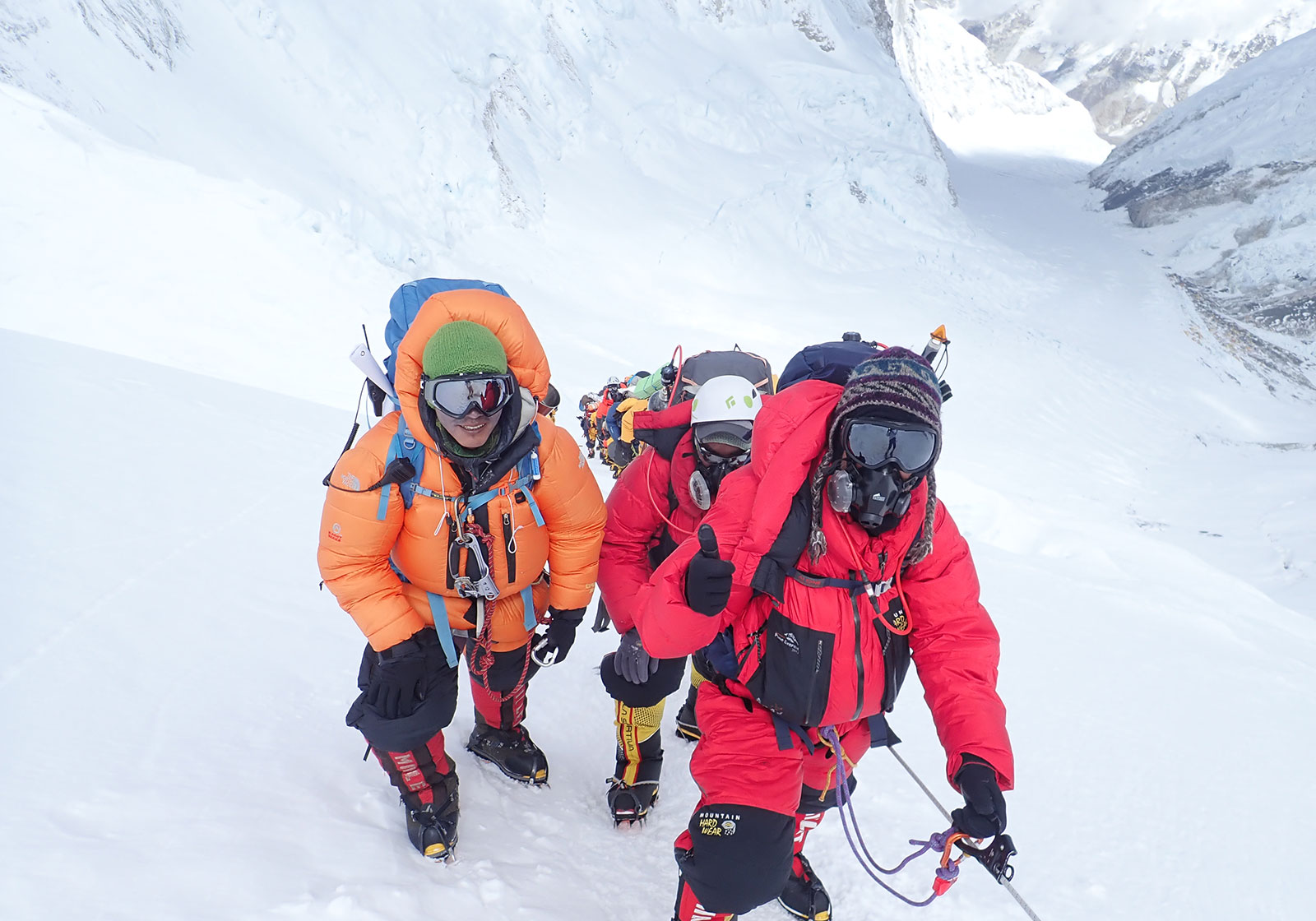
Everest Expedition from Tibet north face side pursued north route is a famous mountain expedition in the world. The Everest North is a relatively more straightforward route than Mt. Everest's south face climbing. Mt. Everest is the tallest mountain globally (8848.86m/ 29032ft), an incredible challenge and experience. Satori Adventures offers a full-service expedition of this world-renowned peak with an average number of climbers and a 1:1 climbing Sherpa/guide to each climber. We are committed to providing the highest support level with reliable and experienced climbing guides, Sherpa support, and the best high-end gear.
Climbing History
The first attempt at Everest from the north side was by a British team in 1921. George Mallory led a small group to be the first human to set foot on the mountain's flanks by climbing up to the North Col 7,003 meters (22,975 feet). The second expedition, in 1922, reached 8,321 meters (27,300 feet) before turning back—the first team to use supplemental oxygen. The 1924 British tour with George Mallory and Andrew "Sandy" Irvine is most notable for the mystery of whether they summited. If they did summit, that would precede Tenzing and Hilary by 29 years. Mallory's body founded in 1999 along the north side route, but there was no proof that he died going up or coming down. A Chinese team made the first summit from Tibet on May 25, 1960. Nawang Gombu (Tibetan) and Chinese Chu Yin-Hau and Wang Fu-Zhou, who is said to have climbed the Second Step in his sock feet, claimed the honor. In 1975, on a successful summit expedition, the Chinese installed the ladder on the Second Step. Tibet was closed to foreigners from 1950 to 1980, preventing further attempts until a Japanese team summited in 1980 via the Hornbein Couloir on the North Face. There have been 4,428 total summits of Mt. Everest up to 2014.
Why Mount Everest Expedition with Satori Adventures?
Satori Adventures always offers an incomparable competency, safety, and comfort in the Everest north (Tibet side) expeditions. In mountaineering, small group size still allows us to adapt to changing conditions and weather far more quickly than many commercial teams, which have become so large over the last five years that they have become difficult to manage. As per our previous experience, there are only 2-3 summit windows allow by nature because of weather conditions. Satori Adventure always supplies and provides fresh and nutritious food at base camp and provides request types of hygienic food above base camp. We always give good Masks, regulator, and Oxygen bottle that adds up to a far more enjoyable experience and successful climb. We follow the itinerary is made possible by utilizing per-acclimatization in hypoxic tents. For Everest Expedition, our company's climbing Guides are highly skilled, time to time reviewed and recognized worldwide due to their training and experiences in this profession and paid up the high range of wages and fees. To these guides and climbers in our Everest Expedition, we will put on a rope. A challenging climb with severe consequences should things go wrong. One of the most things we have to keep in mind while operating the Mt. Everest Expedition is prevention. Everest's north side begins at the Chinese Base Camp (5,150 meters located at the Rongbuk Glacier. The Chinese Base Camp is accessible from Tingri by jeep.
We offer a very competitive cost for climbing Everest from the north face. Our professional service is highly affordable, ensuring the summit's maximum success rate is our primary motto. You will found safety with a highly-skilled mountain base camp and climbing service from Kathmandu to Tibet.
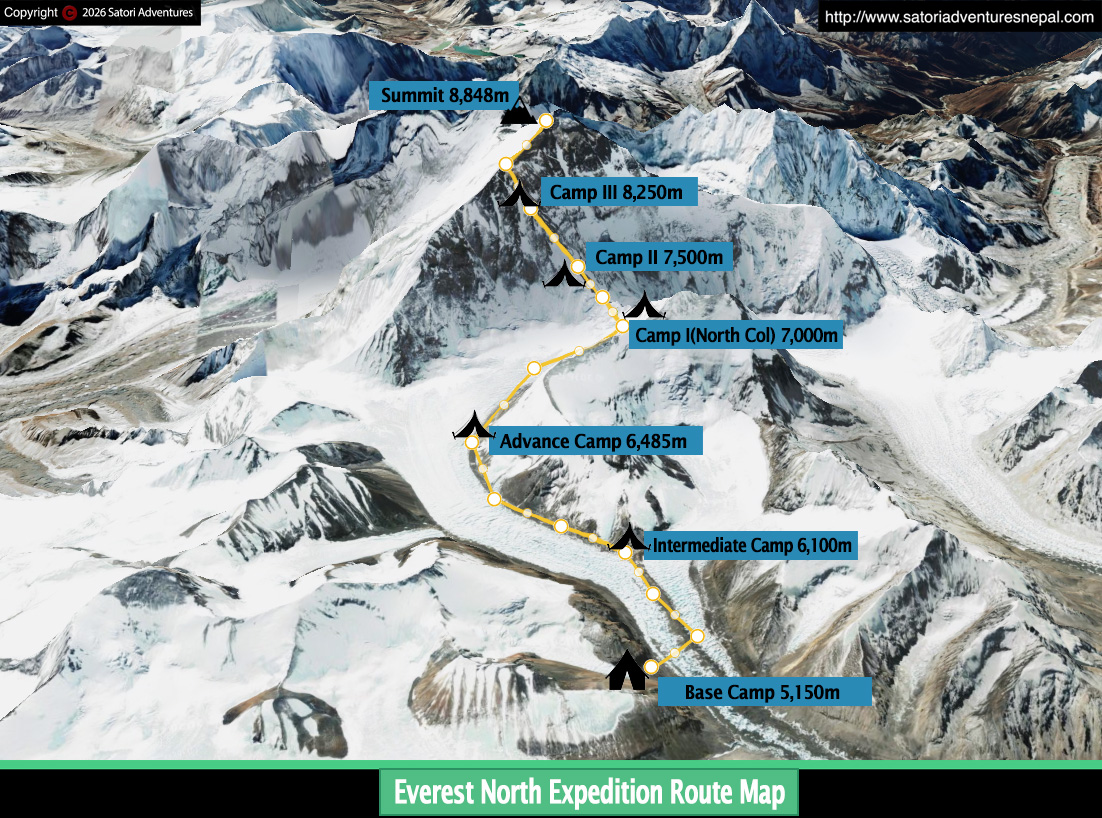
Everest Northeast Route Camps:
Everest Base Camp: 5,150 meters(16,700 feet)
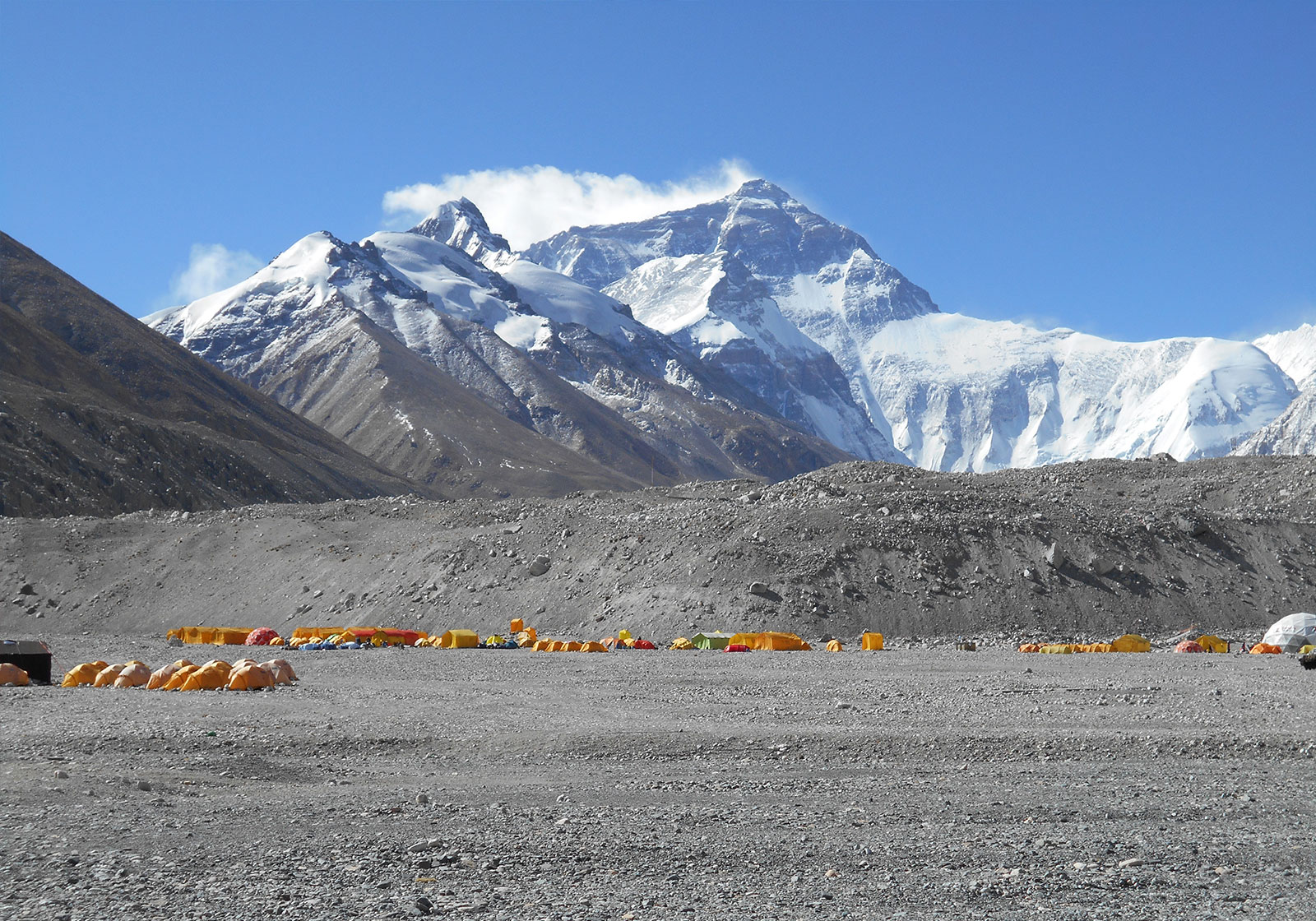
Located on a gravel area 8 kilometers above Rongbuk Monastery, this is the end of the road. All vehicle assisted evacuations to start here, and there are no helicopter evacuations possible in Tibet. Everest Base Camp is a term used to describe two base camps on opposite sides of Mount Everest. The North Base Camp is in Tibet at 5,150 meters (16,900 ft) latitude of 28°8′29″N and longitude of 86°51′5″E. These camps are rudimentary campsites that are used by mountain climbers during their ascent and descent. Climbers typically rest at base camp for several days for acclimatization to reduce altitude sickness risks and severity.
Intermediate Camp: 6,100 meters (20,300 feet)– 6-7 hours
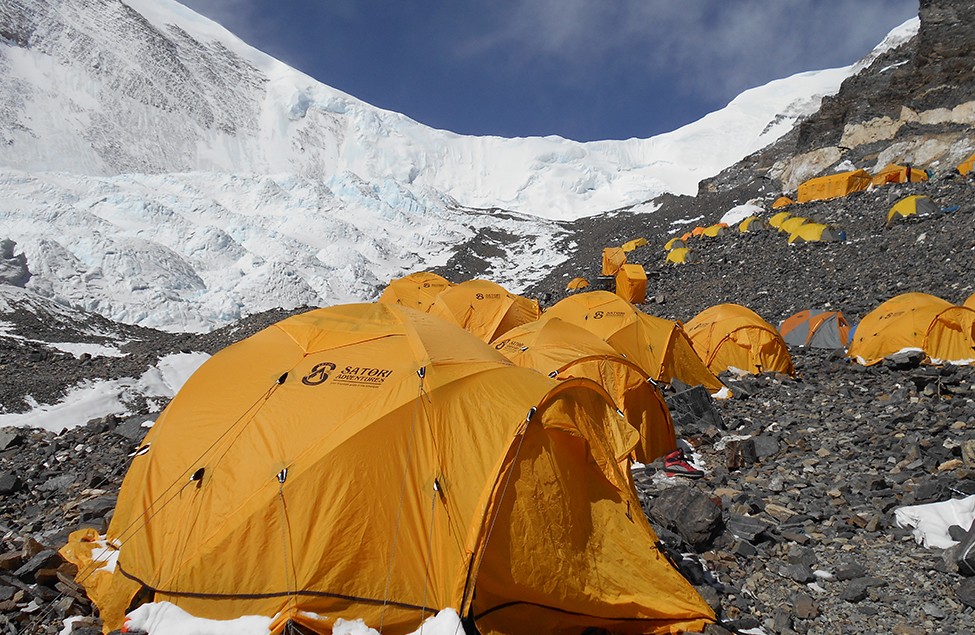
The intermediate camp is used on the first trek to ABC during the acclimatization process. You will also have no more than a resting place for the night where a few tents fix. This area can be lightly snow-covered or with no snow at all, depending on the weather. Most climbers only stop here, ascending to advance camp from base camp. When descending, you can walk from ABC to BC in about 6 hours, and this camp will not be necessary.
Advanced Base Camp (ABC): 6,485 meters (21,276 feet)– 6 hours
Advanced Base Camp on the north side of Everest is one of the world's highest advanced base camps. This position makes it shorter and more comfortable for climbers to reach base I, II, and III from advanced base camp. Most teams will use ABC as their primary camp during the acclimatization period, but some climbers may need to descend to the intermediate camp to acclimate due to its altitude. ABC may or may not be snow-covered and offers stunning views of the North Col.
Camp I (North Col): 7,000 meters (23,000 feet)– 5- 6 hours
Camp I is located just above the East Rongbuk Glacier. Most climbers will use crampons upon reaching the glacier. Within an hour of starting the ascent on the glacier, climbers will begin to utilize a fixed-line and cross ladders placed over deep crevasses. In some areas, the use of an ascender on the fixed rope will be beneficial. Rappelling or arm-wrapping techniques are uses to descend the steeper areas of this section. Generally, climbers will spend 4-5 nights at camp- I during the expedition.
Camp II: 7,500 meters (24,750 feet) – 5 hours
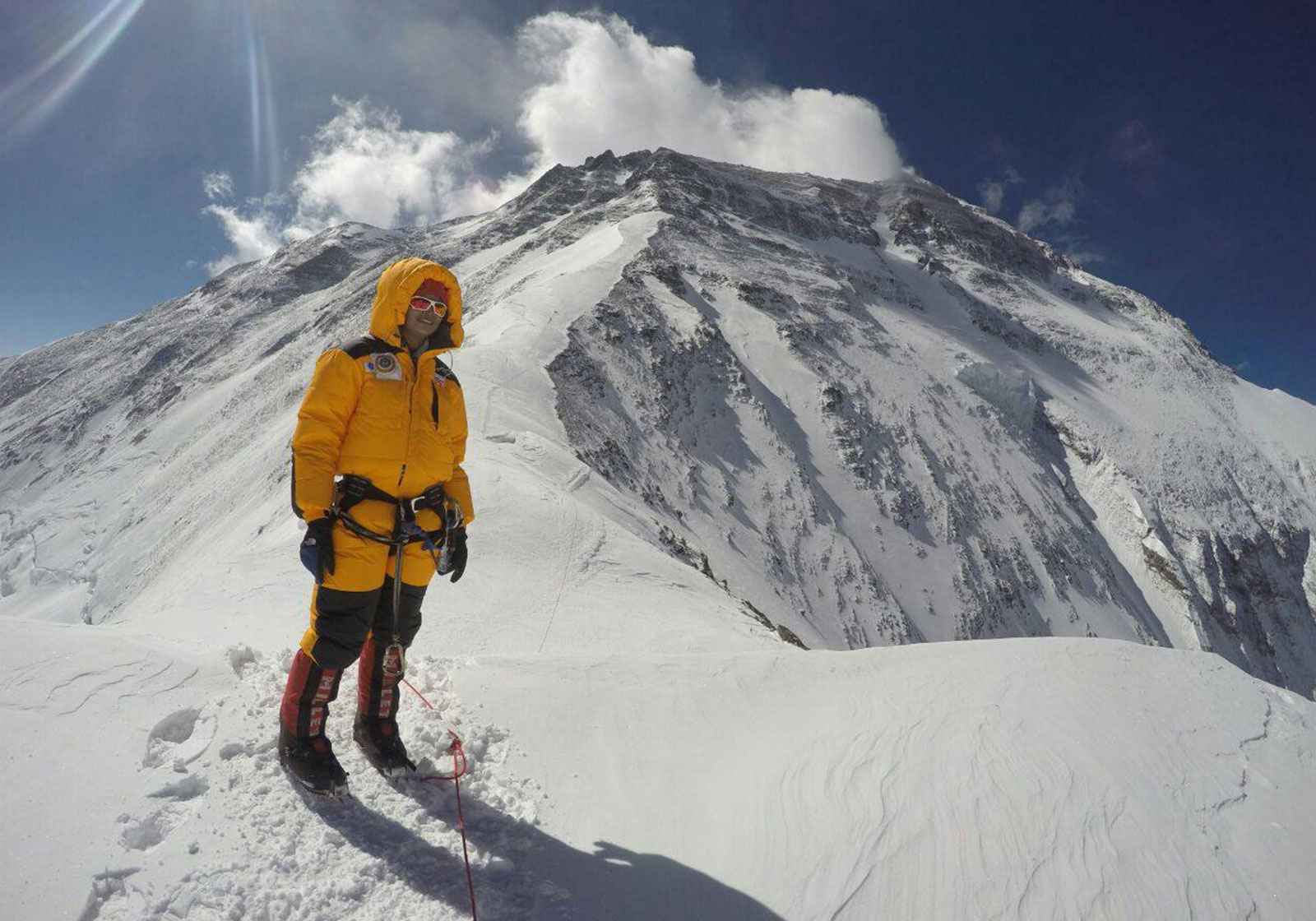
The route to Camp II consists of a steep and snowy ridge that eventually turns to rock. High winds are sometimes a problem during this section, making it especially cold. The wind and air pressure are usually higher on the north face side versus the south side. Some expeditions use Camp II as their highest camp for acclimatization purposes before beginning the summit push.
Camp III: 8,250 meters (27,390 feet)– 6 hours
Camp III lies along the steep area of the mountain that runs from 8,250-8,350 meters. A few small sites to set up camp III and different expeditions will select other regions of the same general area. This area is steep, rocky, and exposed, and tents are perched on rock ledges and generally battered by the wind. Camp III on the north side is 350 meters higher than the South Col and much more exposed. Most teams use this high camp as the last rest spot before the summit bid.
Summit: 8,850 meters (29,029 feet) 9-13 hours.
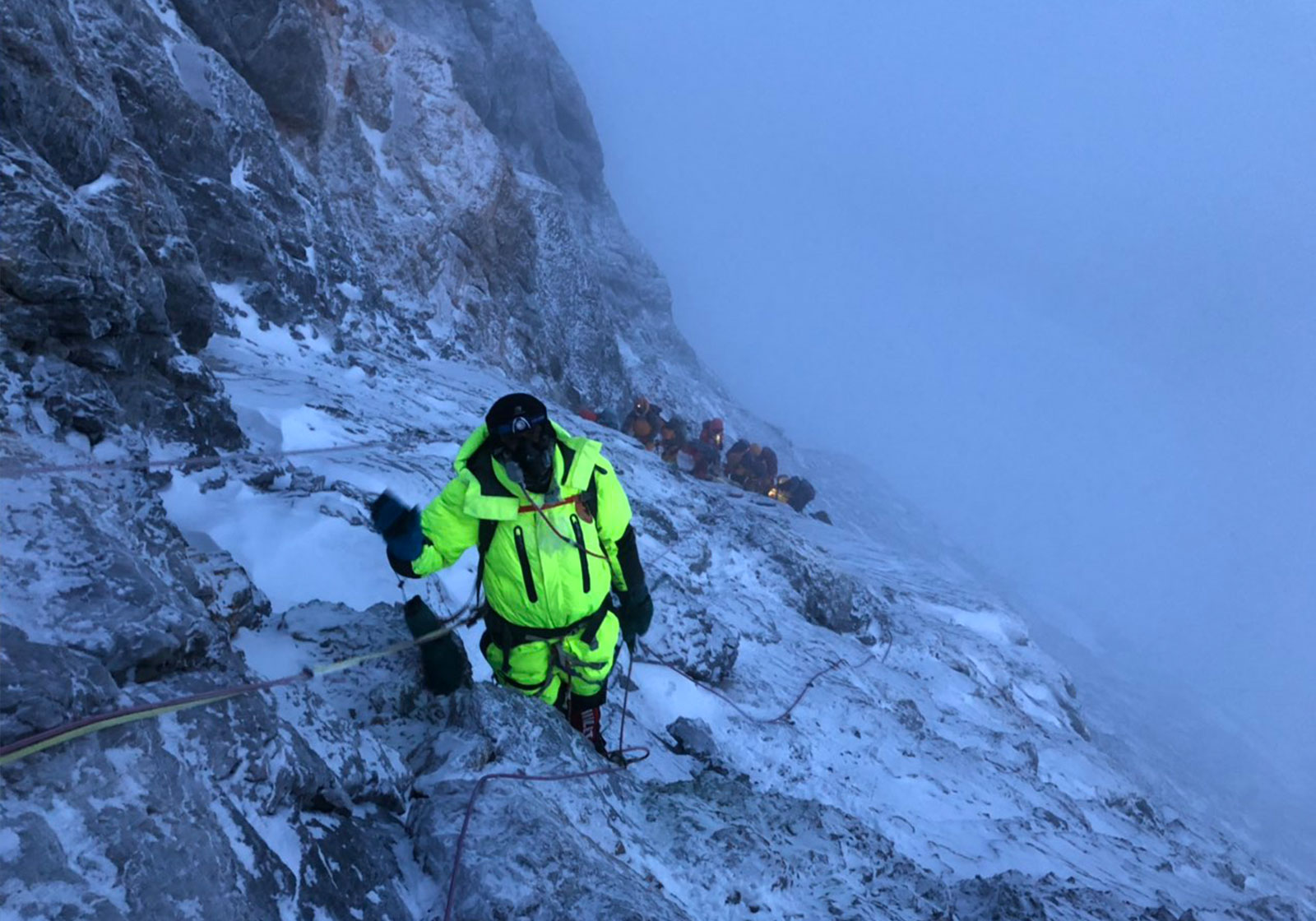
From camp III to the summit is a long and hard day. Climbers use a fixed rope through the snow-filled gully, which is part of the Yellow Band. From the Yellow Band, the climbers change their oxygen cylinder and take a small ramp up to the northeast ridge. The route veers to the high point's right, and most climbers rate it as steep and challenging. From the Mushroom Rock, located at 8,600 meters, the route can be full of loose rock, adding to the difficulty. The next part of the climb is the Second Step, the climb's crux, as climbers use the Chinese ladder. Climbers first ascend a 10-foot rock slab and then climb the near-vertical 30-foot ladder. This section is very exposed with a 9,000-foot vertical drop. It is generally more challenging to navigate on the decent since you cannot see your foot placement on the ladder rungs. Strong climbers take 9 to 10 hours to reach the summit and return to camp III, while more moderate and less experienced climbers take 11-13 hours. Most climbers use 3-4 bottles of oxygen during the summit push and other bottles between camp II and III.
Arrival in Kathmandu Airport and transfer to hotel, hotel accommodation in Kathmandu (1350m/ 4430ft).
Preparation & Visa Process duration at Kathmandu. Hotel accommodation.
Drive from Kathmandu to Timure (1832m/6009ft, 06-07, hrs.) after completing the Immigration formalities drive to Kerung Height (3200m/10499ft,01 hr.) Hotel accommodation
Drive from Kerung height to Tingri (4,348m/14,268ft, 04-05hr) Hotel accommodation.
Rest day at Tingri for acclimatization. The climbing Sirdar will take you up to a (5000m/16404ft) hill for acclimatization after breakfast.
Drive from Tingri to the Chinese base camp (4800m/15750ft, 03hrs) Camping accommodation.
Rest and acclimatization at Chinese base camp (4800m/15750ft). To arrange yaks to go to advanced base camp via middle camp.
Clean the camp, trek to Middle Camp (5300m/ 17388ft, 5-6hrs). Camping accommodation.
Trek from Middle Camp to the ABC (5700m/18700ft) of Everest North camping accommodation.
Climbing Period - summit Period of Mt. Everest (8848.86m/29032ft.) Camping accommodation.
Trek to Chinese Base Camp (5200m/17060ft.) Camping accommodation.
Drive from Chinese Base Camp Then Drive to Tingri (4,348m/14,268ft, 04 hrs.).
Drive from Tingri to Kerung Height (3200m/10499ft, 04-05hrs) Hotel accommodation.
After Completing Immigration formalities drive to Kerung to Kathmandu (1350m/4429ft, 08 hrs.) Hotel accommodation.
For full board clients we provide a personal tent and food, which will be prepared by their climbing Sherpa. We provide UHF/VHF hand held radios on the mountain to maintain communications between ABC and high camps. We provide a personal climbing Sherpa guide to help the clients reach the summit. The secret of success on Everest is a strong and experienced climbing Sherpa. No matter how good and experienced the climber, it is a long slog. Personal climbing Sherpas will set up camp 1, camp 2 and camp 3. They will also carry food provisions, fuel and oxygen and will guide and assist the client on the summit day.
Satori Adventures provides very professional, helpful and friendly service from Kathmandu to the ABC as well as during the climb. Our objective is to provide a good quality, helpful, safe, friendly, stress free and comprehensive service to maximize summit opportunity.
In the Base camp our cooks and helpers will prepare and serve three delicious freshly cooked and plentiful meals a day and will ensure that hot and cold drinks are available 24 hrs a day. In the Base Camp we provide spacious expedition quality personal tents for all our clients both with full board or base-camp service only.In base camp we also provide dining tent, kitchen tent, toilet facilities and portable shower facilities and tent accommodation for our staff.
In base camp we provide access to communication including satellite telephone and internet access, solar panels to charge your batteries and UHF/VHF hand held radios on the mountain to maintain communications between ABC and high camps.
Our camp manager as well as guides and climbing Sherpa’s have an extensive experience on multiple Everest climbs. They will ensure cooperation with other companies and Base Camp organization. In base camp our guides will work with other teams to ensure contribution from all operators for tasks such as route fixing and to ensure the safety of climbers from ABC to the summit.
Mount Everest expedition is an extreme physical and physiological undertaking. If you are considering climbing Mount Everest from North-col route – that was used by the early expeditions of 1920s and 1930s, you must first ask yourself several honest questions: Am I physically fit enough? Am I technically capable of handling the expected terrain and conditions? Am I mentally and emotionally strong enough for high-altitude expeditions?
You must have prior climbing experience on a 7,000-meter peak as a minimum criterion.
If you do not have this certification, you may first climb other mountains in the Nepal Himalayas – such as Mount Himlung, Tilicho Peak, Putha Hiunchuli, or another 8,000-meter peak like Mount Cho Oyu, Shishapangma (Xixiabangma as written in Chinese), and Manaslu – as a preparatory expedition. These climbs will thoroughly test your endurance, technical skills, and decision-making ability, helping you prepare for a Mount Everest expedition.
The Himalayan peaks demand honesty – with yourself first, then with your climbing partners and the expedition organizer. At times during a climb, your life may depend on another person’s awareness and skill, just as their life may depend on yours.
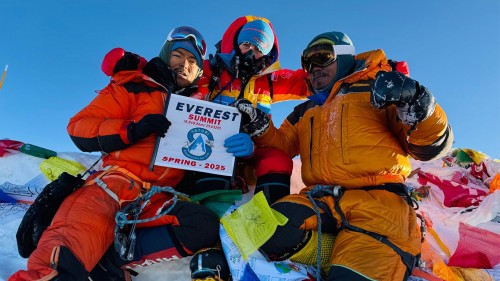
Standing on the highest point on Earth is a lifelong dream for many adventure lovers. A Mount Everest expedition is a journey of self-discovery that tests the limits of both physical and mental endurance under the most extreme conditions on the planet. As you are a thrill-seeker and looking for a truly life-changing experience, there is no alternative in the world to climbing Mount Everest.
Since the beginning, reaching the top of Mount Everest has remained a powerful symbol of pride and courage – not only for individuals, but also for communities and even entire nations. Mount Everest continues to inspire people to dream bigger and achieve what once seemed impossible. The Himalayas are deeply respected as sacred in many beliefs and scriptures, making a Mount Everest expedition not only an adventure, but also a profound spiritual journey.
There is truly no other place and no other experience on Earth that compares to standing on the summit of Mount Everest.
Climbing Mount Everest – the highest point on Earth (8848.86 m / 29031.72ft) – requires power of high endurance, both mental and physical skills and strength. Practically for the success and safety, your previous experiences in rock climbing, snow and ice climbing or even high-altitude climbing experiences in the Himalayas will be beneficial. But, without previous experiences you can opt for our Guided Everest Expedition which is operated with the help of world-class Sherpa with your strong mental/physical preparation and trainings. These may include high VO2 max; strong legs, core, and shoulder; decision-making in extreme situations; strong emotional intelligence and judgements; and the positive mindset.
Mount Everest expedition is one of the most challenging undertakings because of extreme weather conditions, high altitude, and technical segments to climb. But, Mount Everest is less demanding in technical perspectives compared to Mount K2 and even Ama Dablam (6,812 m / 22,349 ft) – being lower in altitude. Mount Everest North route has the most established route, support system, and logistics, thus the higher success rate and less objective risks. Compared to the southeast ridge climbing route north route has historical significance, and is technically demanding, yet less dangerous.
As you know that summiting Mount Everest is one of the most challenging feats, your proper fitness and trainings matter for your success. So, we recommend you to undergo at least 6 months to 18 months’ training related to cardiovascular; body strength – specially legs, core, and upper body; hiking on mountainous terrains; technical mountaineering skills – such as ice climbing, rope work and others; mental preparation – emotional intelligence, decision-making under stressful conditions etc.
In addition to the mandatory 7,000-meter peak climbing certificate, the Chinese government imposes several other restrictions for issuing a climbing permit. Tibet does not allow anyone under the age of 18 to climb an 8,000-meter peak. And, sometime it requires that you have four climbers as a group from the same country.
Any climber with appropriate fitness, skills, and high-altitude experience may apply to climb. However, we take your physical fitness and medical condition including ECG results, and must have no history of HACE or HAPE, or any grave cardiac or respiratory illness very seriously, as this directly affects your safety, the safety of your climbing partners, and the expedition staff.
The South Route begins in Kathmandu, followed by a trek to Everest Base Camp, and is the classic route to the Mount Everest. It was used by the 1953 British Mount Everest Expedition, led by John Hunt, during the first successful ascent by Sir Edmund Hillary and Tenzing Norgay. Before this historic climb, all of the early explorations and expeditions approached Everest from Tibet, via the North Route. Both routes are historical in their own way.
Today, South Route to the Everest summit is more popular today than the North Route. Around 70% of Everest climbers use the South Route. For example, in 2024, there were approximately 74 summits from the Tibet (North) side, compared to around 800 summits from the Nepal (South) side. This difference is largely due to bureaucratic restrictions in Tibet, and challenges in logistics.
Tibet is a dry and has extremely harsh climate. So chances to get sick is high, although this route often considered less objectively dangerous due to the absence of the Khumbu Icefall. However, logistical and rescue limitations make the North Route less preferred.
Airspace over Tibet is strictly controlled by the military, which means helicopter rescue flights are not permitted, and medical facilities are very limited. As a result, if a climber becomes seriously ill or injured, it is extremely difficult and time-consuming to descend and reach a hospital. If you come to Kathmandu for medical treatment – which is closer than to reach Lhasa – Tibet re-entry is not allowed as the single entry visa expires.
On the Nepal (South) side, the situation is very different. If a climber becomes ill, helicopter evacuation to a hospital in Kathmandu is possible, and after recovery, climbers can rejoin and continue the expedition. This availability of rescue and medical support is one of the main reasons why the South Route is preferred by most Everest climbers today.
There are more than 1,700 registered trekking and mountaineering operators in Nepal. However, only about 30 of these companies operate expeditions on 8,000m peaks on a regular basis, and we are proud to be one of the successful Everest expedition operator. We consistently run successful Everest expeditions year after year, along with other 8,000m, 7,000m, and 6,000m peak expeditions.
The company and expedition both led by an experienced mountaineers and industry leaders. Satori Adventures MD has been appointed as the Board Director of Nepal Tourism Board for the term (2024-27) honoring his contribution to the tourism industry and elected General Secretary of the Expedition Operators Association Nepal (EOA-Nepal) for the term (2023-27).
Moreover, we are a homegrown expedition operator from Nepal, with all professional climbing guides born and raised in the Himalayas. We do not simply “fill” expedition spaces; instead, we focus on forming a team of compatible climbers who show strong integrity, honesty, and trust in one another. We work on our philosophy of “High Success and High-Safety”.
The expedition team leader who will lead you to the summit of Mount Everest is highly experienced, well-qualified, and have been working with us tirelessly for decades. Most were born in the high-altitude regions of the Himalayas and have spent their lives above 4,000 meters, which gives them unparalleled altitude adaptation and mountain knowledge.
Our expedition leaders have at least five successful Everest summits, strong high-altitude guiding experience on other 8000 m peaks, and excellent safety records. They possess deep knowledge of weather patterns, route management, and rescue procedures, along with strong leadership and communication skills. They are well-known in the mountain community for their excellent coordination with other expedition companies and are highly respected figures in mountain tourism. Their professionalism, patience, and respect toward every climber make them among the most trusted leaders on the mountain. They also have exceptional expertise in rope fixing and route opening, ensuring maximum safety and efficiency throughout the expedition.
Your personal Sherpa guide who assist you are certified mountain guides through the Nepal Mountaineering Association (NMA) and the Nepal Government, with advanced mountaineering training from NMA and other related trainings from Trekking Agencies Association of Nepal (TAAN) and Nepal Academy of Tourism and Hotel Management (NATHM). Some of our guides are also certified through the International Federation of Mountain Guides Associations (IFMGA). Every Sherpa leader and guide holds a valid Nepal Government license, Mountaineering Association accreditation, and official summit certificates. In addition, we provide extensive training to our Sherpa guides in technical mountaineering, English communication, customer service, and Wilderness First Aid, ensuring they are fully prepared to offer the highest level of safety and support on your Mount Everest expedition.
Most importantly, your Sherpa Guide already have three summit achievements on 8,000m peaks in the Himalayas before we assign them to an Everest expedition as a Guide with you. You can find detailed profiles and accomplishments of our Sherpa Guides here
No. Due to Chinese government regulations, military-controlled sky, and restrictive policies, helicopter evacuation is not possible on the north side of Mount Everest. Even at the North Base Camp (5,150 m), helicopter evacuation is not permitted.
As a result, evacuation must be carried out using yaks or human porters to bring you down to a lower altitude, followed by ground transportation to lower-altitude towns. This makes rescue and evacuation operations significantly slower on the Tibet side compared to the much faster evacuation options available on the Nepal side.
Yes, having a good travel/climbing insurance with wide coverage is essential while attempting a mountain peak like the Mount Everest. Your small investment in insurance can save you from very high costs in the future. As this expedition involves high-altitude conditions, the risk of hazards is significantly higher. Proper insurance coverage thus can protect you from any unexpected financial or medical burdens in the future.
Your insurance should include high-altitude medical coverage for altitude related illness such as Acute Mountain Sickness (AMS), High-Altitude Pulmonary Edema (HAPE), High-Altitude Cerebral Edema (HACE), and other possible injuries like frostbite, fall etc. The policy must cover altitudes of 8,000m or higher.
Emergency evacuation must also be incorporated in your insurance policy. We generally advise a minimum coverage of USD 25,000 for evacuation and rescue services.
Furthermore, your insurance should also include repatriation to your home country if required (this is not mandatory and entirely up to your preference). Besides these, your policy may cover costs of loss, delays, cancellation of services etcetera.
The cost of gear depends on its quality. For premium, expedition-grade equipment, the total cost can range from USD 10,000 to USD 15,000. This typically covers items such as a summit down suit (for extreme cold), high-altitude boots, sleeping bags (for both Base Camp and high camps), a sleeping pad or mat, multiple layers of clothing, and various technical items – including a harness, helmet, ice axe, crampons, carabiners, belay devices, ascenders, and other essential personal items.
Mount Everest is primarily climbed via two routes: The Southeast Ridge from Nepal (South Side) and the North Ridge from Tibet (North Side). The route in south side has glaciers, Icefall, and steep snow and rock faces whereas the north side route in Tibet has broader approach through Rongbuk Glacier, snowy North Col, and exposed terrain.
We establish Base Camp at 5,182 m (16,995 ft) and an Interim Camp at 6,187 m (20,300 ft) along the east Rongbuk Glacier, which met with Changtse Glacier in higher altitude. The Advanced Base Camp is set at 6,492 m (21,300 ft), and Camp I (North Col) will be placed at 7,000 m (22,966 ft) on the snowy ridge connecting Everest to Changtse. The Camp III will be at 8,300 m (27,231 ft) and above this camp it demands some technical climbing.
When you arrive at Base Camp, you prepare for acclimatization and may rest. Meanwhile, our staff will set up the camps. We perform a Pooja ceremony – customary Sherpa ritual to beg pardon for climbing holy Himalayas, and seek blessings of safe passage to the summit – at the Base Camp.
In general, you spend about 8-10 days at Everest Base Camp 5,150 m (16,896 ft) for acclimatization rotation. Here at this base camp you train yourself and gain confidence in the ladders, and fixed ropes. After this, start the first rotation of the acclimatization. You hike to the Interim Camp and proceed to Advanced Base Camp (ABC) at 6,400 m (20,997 feet). Interim Base Camp generally used as the transition whereas ABC is the hub of acclimatization rotations. So, you may sleep several nights here.
From ABC you start your acclimatization rotation. Climb to North Col at 7,000 meters (23,000 feet), sleep overnight and then return to the ABC to stimulate the blood circulation. At this stage you get the first exposure of 7,000 m. altitude. After recovery, you climb to the Camp II at 7,500 m (24,606 ft) and descend down. You may sleep overnight at this stage if you feel comfortable.
Now, the week to recover, and plan for the dream climb at the Base Camp. Or, as optional rotation you can climb, touch the Camp III at 8,000 m just below the summit pyramid and return to the ABC.
You wait and monitor the weather window. Plan for the summit.
While you are busy in the acclimatization rotation as mentioned earlier, our Sherpa guides will pitch camps (Interim camp, Advanced Base Camp, Camp I, II, and III) and will gradually ferry gears, equipment, and foods to these higher camps. You routinely climb up to the higher camps and return to Base Camp to sleep or try to sleep another night in the higher camps. This continues until the summit rotation begins.
Once your body is fully acclimatized and a favorable weather window is forecasted, the summit rotation begins. Climbers move progressively through Camps I to III following established routes, before making the final push to the summit of Mount Everest.
In Camp III, your summit push begins. You rest for a while in the latter afternoon and evening and embark on a journey to achieve your dream at around 9-10 pm. You climb through steep snow section and reach the Northeast Ridge. Soon after, your challenging section known as ‘steps’ begins. There is the rock bank almost vertical – particularly in the Second Step – to climb divided into three steps – First Step, Second Step, and Third Step. You finally arrive to the Mount Everest summit traversing through zigzag ridge in the early morning.
From the summit, you descend carefully and reach as far as possible. Camp II will be minimum target, and you may descend down as far as ABC depending upon all conditions.
Our Everest Expedition 2026 itinerary is designed for approximately 62 days in total. You should also allow an additional 2- 4 days for international travel to and from Kathmandu, depending on your location and flight availability. So, it makes about 65-68 days’ trip.
Out of the 65 days, around 43 days are spent at Everest Base Camp and higher camps for the climbing and acclimatization phases. The remaining time is allocated for the travel to the Everest Base Camp, essential pre-expedition preparations in Kathmandu, and post-climb rest and shopping before your departure.
This extended schedule is carefully designed to provide proper acclimatization, flexibility for weather delays, and a safer summit attempt on Mount Everest.
There’s no doubt that spring (April-May) is the best season to climb Mount Everest. In spring the brutal winter winds begin to ease, and winter snow has compacted into firm and hard ice –making the route more stable. Sunny days help surface snow to melt and consolidate, while slightly warmer daytime temperatures reduce the risk of severe frostbite and other complexities. Visibility is usually better and snowfall lighter, and the Khumbu Icefall – one of the technical and difficult barriers – tends to be more stable for route fixing and ladder placements.
Although it can be short, spring season creates the crucial weather windows needed to attempt the summit safely. Moreover, most of the Everest expeditions take place in spring, thus logistics, fixed lines, and Sherpa support are at their strongest – further increasing safety and success rates.
Autumn (September-October) is not a viable alternative for climbers in the north route like the south. Tibetan plateau is windier, harsh, and cold in the autumn season whereas south is comparatively warm and less windy. It can be climbed in autumn season as well, but the challenge is significant.
Other seasons on the North (Tibet) Everest route pose more challenges for climbers than spring. The monsoon (rainy) season from June to August in Nepal is characterized by frequent heavy rainfall and flooding. As a result, access to Everest Base Camp from Nepal may be closed during this period. Autumn and winter months are harsh in Tibet, with strong winds and extreme cold, making climbing conditions extremely challenging.
You may be worried about crowd in the Everest expedition because of past news about Everest ‘traffic jams’ and occasional fatalities linked to delays. But, this is from the south route of the Everest. And, north route is comparatively less-crowded every year. It is hard to predict the crowd for the next season right now, but with global travel rebounding after the pandemic and strong interest in Everest expeditions, climbers could again be high in the Everest. We want to tell you that, it is a manageable issue when handled correctly.
There are stricter regulations in the Tibet side for permit as well, and solo permit is not allowed. All climbing permit will be issued in a group only. Our expeditions are group-joining, with carefully organized logistics and the support of highly experienced, well-trained, and reputable Sherpa guides to ensure a safe and successful summit experience.
All foreign visitors, except Indian nationals, are required to obtain a Nepal visa. These visas are generally easy to obtain upon arrival at Tribhuvan International Airport. Nationals from some African countries, as well as Afghanistan and Pakistan, may face additional time for processing.
Since spring 2015, Nepal Immigration has introduced a computerized automated visa system, making the arrival process faster and more convenient. You can fill up online form, and visit Nepal embassy in your home country, along with two passport sized photographs to get the visa – if there are any and close to your home. Alternately, you can bring the form and get visa at the immigration upon arrival in Kathmandu. As Everest expedition lasts longer than 60 days, we recommend obtaining a 90-day multiple-entry visa, which currently costs US$ 125.
For detailed information on immigration rules, items you can bring, and other travel regulations, please visit the official Nepal immigration website: https://www.immigration.gov.np/en.
For Tibet visa and permit, we apply on your behalf. We communicate later on required documents as Chinese rules keep changing.
A successful Everest expedition needs everything from an experienced and a strong Sherpa team, cooks, and other staff at the base camp, reliable and well tested equipment such as tents, ropes, high altitude stoves, wide variety of food selection inclusive of fresh vegetables, and fresh fruits, specialized high altitude food, good base camp facilities such as individual tents, clean and well maintained kitchen, dining, shower, and loo tents for the entire team and staff, brand new oxygen bottles, high quality summit masks and regulators for the climbers and Sherpa guides, a comfortable and luxury trek in and out of the base camp, and above all a strong ground operation in Kathmandu that takes care of all government formalities and paperwork, and is available to organize rescues incase of emergencies on the mountain.
Rishi and Satori adventures provided every single thing from the above list, and they went above and beyond all expectations. 6 out of 7 members made it to the top of Mt. Everest and made it back down alive. A big part of this success is due to the Satori adventures' team and organization both on and off the mountain. Rishi as the CEO of Satori adventures provided us full support throughout our Everest climb. Rishi understands how to run a big mountain expedition and deeply cares for the success and safety of all expedition members. Two of the climbers on my team required immediate helicopter evacuation from Camp two, and Rishi organized that without any delay.
If you are looking to climb Everest or any of the other 8000 meter mountains in Nepal or Tibet, I would highly recommend that you go with Satori adventures. And if you are looking to do any trekking or climbing a 6000 meter or a 7000 meter mountain I would again recommend to climb with Rishi and his team. I have now been on three 8000 meter mountain expeditions and one 6000 meter mountain expedition with Rishi and his team and I have no complaints at all. Every single aspect of the expedition is very well taken care of. Highly Highly Highly recommended!
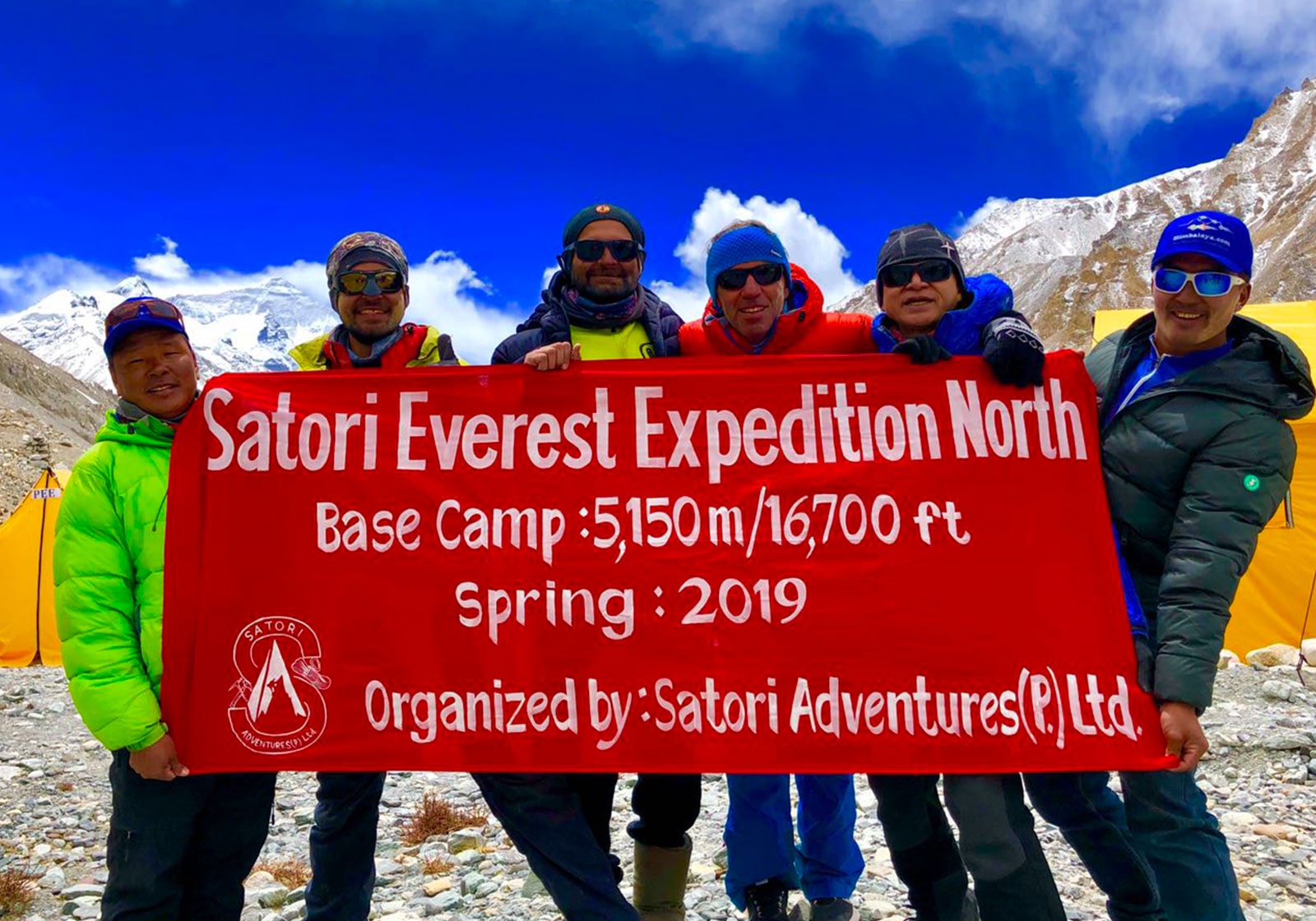
I was a part of Mount Everest North Side expedition of 2019.I could not have asked for better services than provided by Satori and team. Two of our Sherpa s, Mingma Tenzi and Funaru Dai stuck by us like shadows. I owe my safety and success to Satori team. Looking forward to doing more expeditions with them.
Satori adventure Nepal, provides all facilities during our Everest north expedition 2018, services of all staff and of Sherpa was excellent, The owner of the Satori Adventures Mr. Rishi Bhandari made all arrangements perfectly, thanks to Rishi sir and to his team for making and supporting me, my dream of Everest was fulfilled with satori adventure. I am able to summit with safe and successful way because of Satori experience. this company is really profession company. Dreaming of climbing 8,000 meters is not so easy in itself! When you are looking to climb the world s highest mountain, choosing a professional company and an experienced climber Sherpa guide is the main challenge. If you book with Satori Adventure, all you have to do is leave the company and start your training. I wish Satori and entire team all the best for your hard work. Jitesh Modi India
Enjoy the popular trekking and tour packages in Nepal Himalayas.